
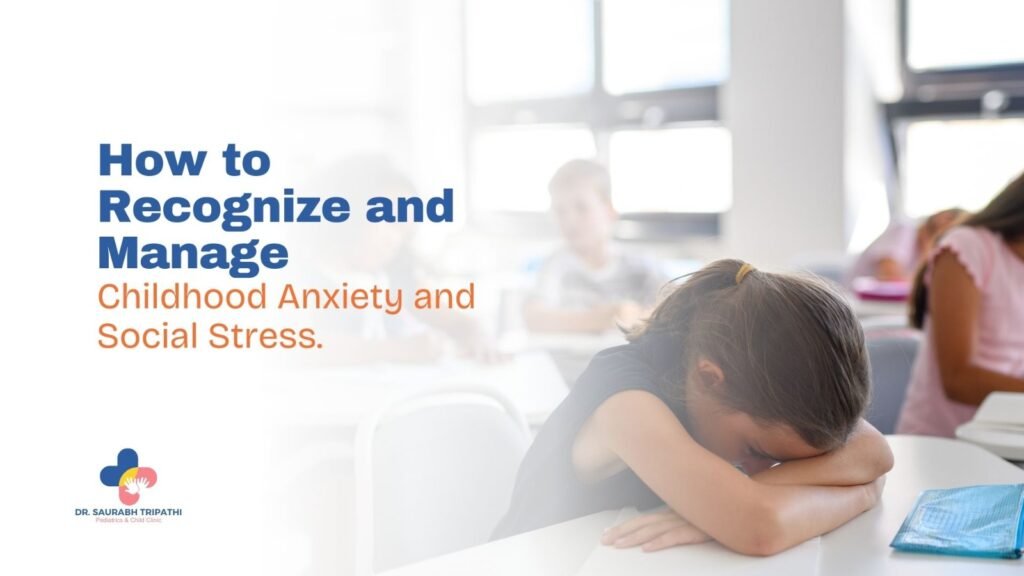
Childhood is often seen as a carefree phase — but many children silently struggle with anxiety and social stress. School pressure, peer expectations, exams, social comparison, and even changes at home can deeply affect a child’s emotional well-being.
As a pediatrician, I frequently meet parents who say, “My child has changed… they seem withdrawn or irritable.” Recognizing early signs of anxiety can make a big difference in preventing long-term emotional challenges.
Let’s understand how to identify childhood anxiety and how parents can manage it effectively.
What Is Childhood Anxiety?
Anxiety is a natural response to stress. However, when fear or worry becomes excessive, persistent, and interferes with daily life, it needs attention.
Common triggers include:
Starting school or changing schools
Exams and academic pressure
Bullying
Social rejection
Family conflicts
Excessive screen exposure
Mild anxiety is normal. But chronic anxiety can impact sleep, appetite, studies, and confidence.
Signs of Anxiety in Children
Children may not always express anxiety in words. Instead, it often appears through behavior and physical symptoms.
Emotional Signs:
Frequent crying
Irritability
Excessive fear of failure
Clinginess
Avoiding social events
Physical Symptoms:
Recurrent stomach aches
Headaches
Nausea
Fast heartbeat
Sleep disturbances
Behavioral Changes:
Avoiding school
Sudden drop in academic performance
Isolation from friends
Nail biting or hair pulling
If these signs persist for weeks, professional guidance is recommended
Understanding Social Stress in Kids
Social stress arises when children feel:
Judged or compared
Excluded by peers
Pressured to “fit in”
Afraid of embarrassment
Social media exposure has also increased comparison and self-doubt in older children.
Over time, untreated social stress may lead to low self-esteem and social withdrawal.
How Parents Can Help Manage Childhood Anxiety
1️⃣ Encourage Open Communication
Create a safe space where your child can talk without fear of judgment.
Ask:
“How was your day emotionally?”
“Did anything make you uncomfortable today?”
Listen more, advise less.
2️⃣ Maintain Routine and Stability
Children feel secure with predictability.
✔ Regular sleep schedule
✔ Balanced meals
✔ Limited screen time
✔ Structured study hours
Routine reduces uncertainty — which lowers anxiety.
3️⃣ Teach Emotional Coping Skills
Help children learn:
Deep breathing techniques
Positive self-talk
Problem-solving strategies
Relaxation exercises
Even simple breathing exercises before exams can help calm nerves.
4️⃣ Avoid Over-Pressuring
Excessive academic or performance pressure can increase stress.
Encourage effort, not perfection.
Celebrate progress instead of only results.
5️⃣ Promote Social Confidence
✔ Encourage participation in sports or group activities
✔ Teach respectful communication
✔ Practice social scenarios at home
Confidence builds gradually through positive experiences.
6️⃣ Watch for Red Flags
Seek medical advice if your child:
Refuses school consistently
Has panic attacks
Talks about self-harm
Shows extreme mood changes
Experiences severe sleep problems
Early intervention prevents long-term mental health issues
When to Consult a Pediatrician
If anxiety affects:
Daily functioning
School attendance
Physical health
Social relationships
A pediatric evaluation can help identify underlying causes and guide further management. Sometimes referral to a child psychologist may be beneficial.
Mental health is as important as physical health.
A Reassuring Message for Parents
Anxiety does not mean your child is weak. It means they are overwhelmed and need support.
With patience, understanding, and timely care, most children overcome anxiety and develop emotional resilience.
Healthy minds create healthy futures.
If you are concerned about your child’s emotional well-being, seeking guidance early can make a lasting difference.