
By Dr. Saurabh Tripathi
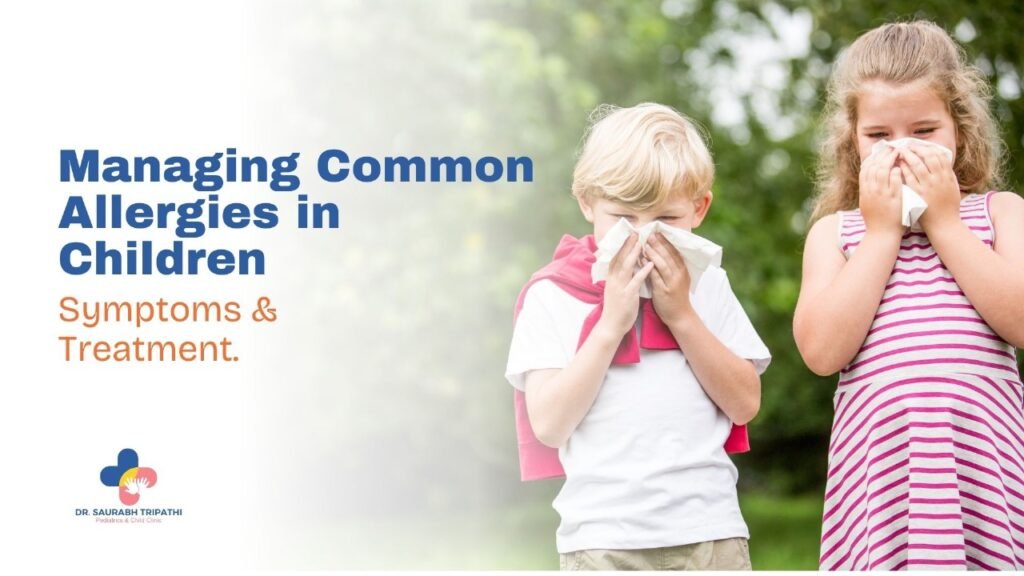
Allergies are among the most frequent health concerns in children. Whether it’s sneezing fits during springtime or unexpected reactions to food, allergies can significantly affect a child’s daily life and overall well-being. As a pediatrician, I often see concerned parents trying to navigate the maze of symptoms and treatment options. The good news? With the right knowledge and care, most childhood allergies can be effectively managed.
In this blog, I’ll guide you through the most common allergies seen in children, how to recognize the symptoms, and the best ways to treat and prevent allergic reactions.
🌿 What Are Allergies?
An allergy is an overreaction of the immune system to substances that are normally harmless—like pollen, dust, or certain foods. In children, allergies can present in a variety of ways, from skin rashes to respiratory issues and even digestive symptoms. Early recognition and management are key to preventing complications.
.
👶 Common Allergies in Children
1. Food Allergies
Food allergies are becoming increasingly common. The most frequent triggers include:
Milk
Eggs
Peanuts and tree nuts
Soy
Wheat
Fish and shellfish
Symptoms: Hives, swelling, vomiting, stomach cramps, difficulty breathing, and in severe cases, anaphylaxis, which is a medical emergency.
Symptoms to Watch Out For
Allergy symptoms can sometimes be mistaken for a cold or stomach bug. Here’s what to keep an eye on:
Sneezing, coughing, or wheezing
Runny or stuffy nose
Itchy, watery eyes
Skin rashes or hives
Nausea, vomiting, or diarrhea (in food allergies)
Fatigue or irritability
Difficulty breathing (in severe reactions)
If your child experiences sudden swelling, trouble breathing, or loss of consciousness after exposure to an allergen, seek emergency medical attention immediately — it could be anaphylaxis.
Diagnosis
If you suspect your child has allergies, consult a pediatrician or allergist. Common diagnostic methods include:
Skin prick test – small amounts of allergens are pricked into the skin to observe reactions
Blood tests – to check for specific antibodies
Elimination diet – to identify food allergies by removing suspected items
Treatment Options
1. Avoidance
The best way to manage allergies is to avoid known triggers. This includes reading food labels, keeping pets out of bedrooms, and using dust-mite-proof covers on bedding.
2. Medications
Antihistamines: Help control sneezing, itching, and runny noses
Decongestants: Reduce nasal swelling
Corticosteroid nasal sprays: Help with inflammation
Epinephrine auto-injectors (EpiPens): Essential for children with severe allergies
Always consult your doctor before starting any medication.
3. Immunotherapy (Allergy Shots)
For long-term relief, allergy shots may be recommended. These help the immune system build tolerance to allergens over time.
Tips for Parents
Keep an allergy diary to track symptoms and triggers
Inform schools, babysitters, and caregivers about your child’s allergies
Have an emergency action plan for severe reactions
Use air purifiers and keep your home clean
Encourage children to speak up if they start feeling unwell
Final Thoughts
Managing allergies in children requires a proactive and informed approach. Early diagnosis, careful avoidance, and proper treatment can make a world of difference in your child’s health and comfort. With the right strategies, children with allergies can lead happy, active lives without constant worry.